Beyond the Catfish: The Emergence of Cartel Personas and Graphic Threats in Romance Scams

Online romance scams have evolved from slow, relationship based manipulation into fast moving, high pressure extortion operations.

Online romance scams have evolved from slow, relationship based manipulation into fast moving, high pressure extortion operations.
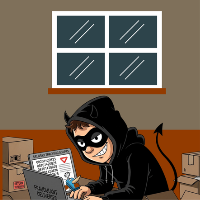 Online shopping fraud has evolved well beyond simple non-delivery schemes. Criminals now run layered operations targeting legitimate transactions through technical means, and a rising global trend involves victims being pressured to pay so-called refundable insurance fees by e-transfer.
 Scammers target individuals through unsolicited phone calls and electronic messages. These actors pose as hiring agents for YouTube or associated marketing firms to promote fraudulent remote positions.
 If you own a business, hold a trademark, or have filed any form of intellectual property application anywhere in the world, you are a target, and this is no longer limited to one country, one regulator, or one system but instead reflects a coordinated global scam ecosystem operating across North America, Europe, the United Kingdom, Australia, and beyond.
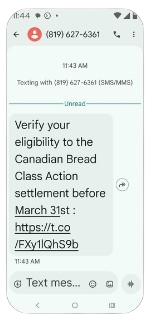
I just received another unsolicited text message claiming I need to verify my eligibility for a bread class action settlement. It referenced a deadline and included a link appearing official at first glance. The wording was structured in a way resembling legitimate notices tied to legal claims.
 Your smartphone is not just a communication tool. It functions as a digital identity vault, containing banking access, stored passwords, private messages, photos, contacts, and authentication codes. In many cases, it also provides direct entry points into email accounts, cloud storage, and financial platforms.
 I recently came across a growing number of similar posts from concerned individuals across multiple social media groups around the world. Reports describe a recurring street level approach in public spaces such as parking lots, shopping centres, and busy pedestrian areas across North America, Europe, and Australia.
 Here is a new one. Have you heard of debanking? This emerging scam tactic involves fraudsters threatening to terminate your financial services by exploiting real regulatory headlines.
 Recent investigations by global fraud agencies and security firms show a sustained surge in recruitment scams. These are no longer basic phishing emails. They are structured, multi step operations designed to closely replicate legitimate hiring pipelines used by major technology firms.
 The United States China Economic and Security Review Commission has detailed the rapid expansion of industrial scale scam centres operated by Chinese criminal networks, many based in Southeast Asia and generating massive global losses. Americans alone lost at least 10 billion dollars in 2024, with projections expected to rise even further in 2025.