
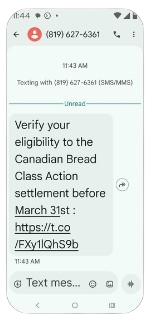
I just received another unsolicited text message claiming I need to verify my eligibility for a bread class action settlement. It referenced a deadline and included a link appearing official at first glance. The wording was structured in a way resembling legitimate notices tied to legal claims.
The tone, delivery method, and unsolicited link stood out immediately. It followed the same pattern seen in similar messages, where something real serves as a hook to create a false sense of legitimacy.
𝗥𝗲𝗮𝗹 𝗡𝗲𝘄𝘀 𝗨𝘀𝗲𝗱 𝗔𝘀 𝗔 𝗕𝗮𝗶𝘁
What makes this type of message concerning is how it is built around real information combined with geographic targeting and phone number spoofing. The Canadian bread price fixing class action is a genuine and widely reported case, involving coordinated pricing practices and a settlement process for eligible individuals.
Scammers rely on public awareness of this case to build credibility. At the same time, messages can appear locally sourced through spoofed phone numbers, often using area codes and numbering patterns consistent with the region. This creates a stronger sense of relevance for recipients in Canada and reduces initial suspicion.
By aligning the content with a real case and making the sender appear local, the message feels more legitimate at first glance. The real story becomes the entry point while the appearance of local origin reinforces the illusion of authenticity.
𝗛𝗼𝘄 𝗧𝗵𝗲 𝗠𝗲𝘀𝘀𝗮𝗴𝗲 𝗜𝘀 𝗙𝗿𝗮𝗺𝗲𝗱
The structure of the message follows a consistent pattern.
- It introduces a real topic
- It adds urgency through a deadline
- It provides a direct link instead of verifiable instructions
- It avoids offering clear, independently confirmable details
This approach is designed to encourage immediate action instead of careful verification.
𝗧𝗵𝗲 𝗩𝗲𝗿𝗶𝗳𝗶𝗰𝗮𝘁𝗶𝗼𝗻 𝗣𝗮𝗴𝗲 𝗘𝗹𝗲𝗺𝗲𝗻𝘁
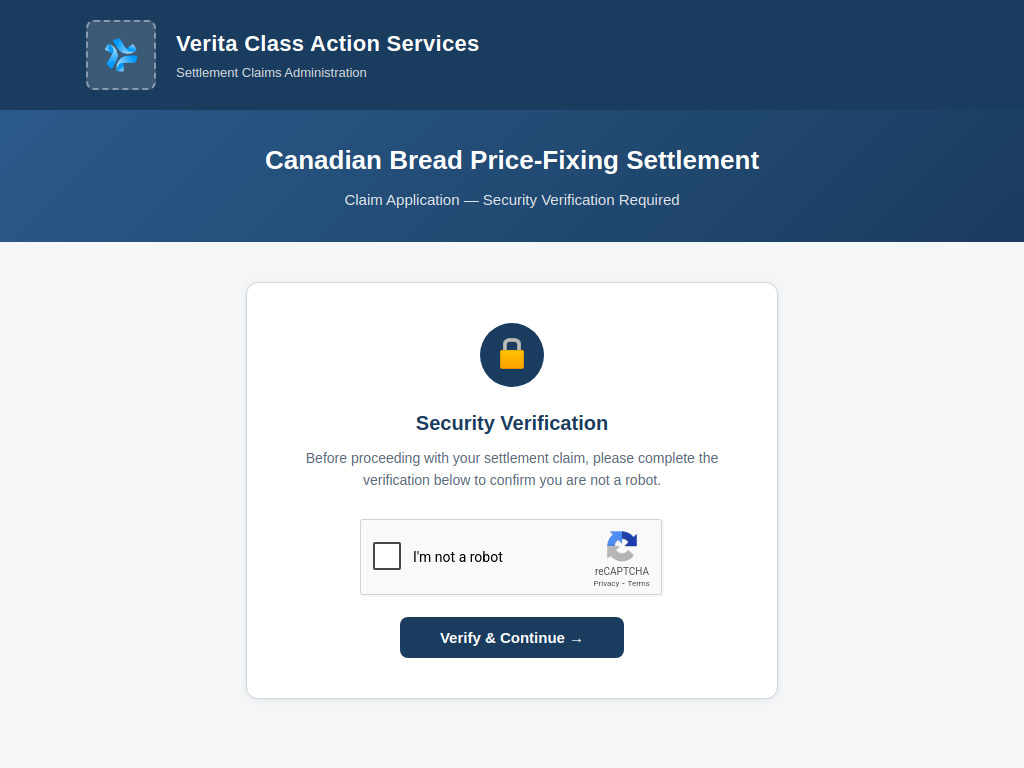
If a person follows the link, they are typically presented with a page including a human verification step. This often appears as a checkbox or similar prompt asking the user to confirm they are not a robot before continuing.
To examine this safely, I used a sandbox environment which provided a screenshot of the page without actually visiting the live site. This approach allows a visual inspection without exposing a device to potential risk.
Following unknown links can be dangerous. Even a single click can lead to tracking, data collection, or exposure to malicious content. In some cases, background activity may begin before any interaction beyond opening the page.
The verification element itself is widely used across legitimate websites, but in this context it serves as part of a controlled flow designed to build trust and guide the visitor further into the process.
𝗪𝗵𝘆 𝗧𝗵𝗲 𝗥𝗲𝗮𝗹 𝗦𝘁𝗼𝗿𝘆 𝗠𝗮𝘁𝘁𝗲𝗿𝘀
Using a real class action settlement gives the message a foundation already present in public awareness. It removes the need to convince someone the topic is legitimate.
Instead, the scam relies on recognition. If the recipient has heard of the case, the message feels more plausible. Familiarity lowers hesitation and increases the likelihood of engagement.
This is a recurring tactic. Real events are repurposed as a credibility layer for fraudulent activity.
At first read I know it was a scam, but the structure still stands out because of how closely it mirrors legitimate communication. The combination of a real news topic, urgency, and a verification step is designed to influence quick decisions.
These messages depend on recognition and timing instead of accuracy. The safest response remains the same. Treat unsolicited messages with caution, avoid following unknown links, and verify any claims independently before taking action.
- Log in to post comments