
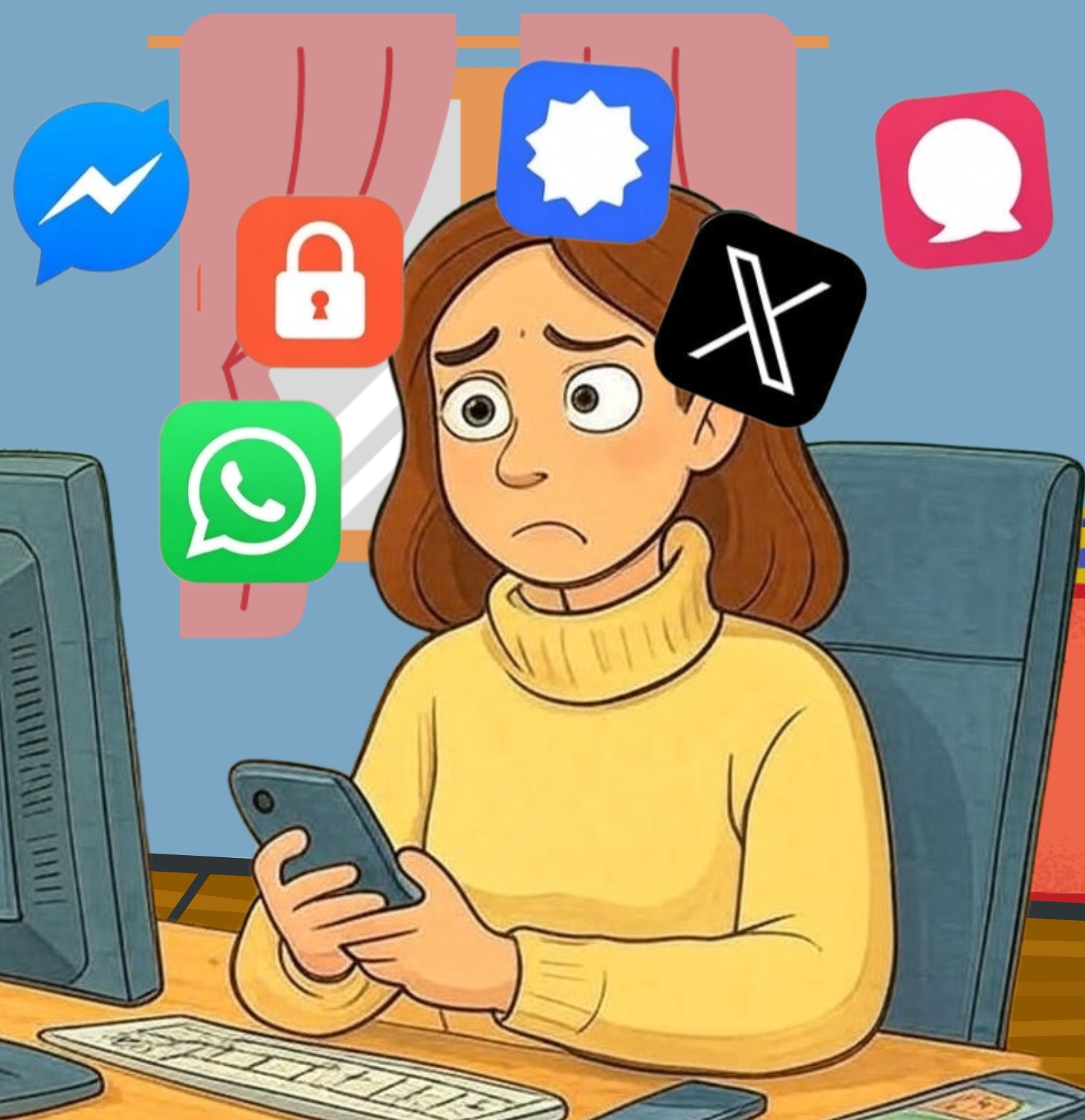
 Messaging platforms have become core to modern digital life: social contact, business coordination, media sharing, document exchange, even financial-transaction setup. Among them, Xchat is currently being marketed by Elon as “the next best thing” promising greater freedom, fewer restrictions, easier onboarding, and a more open file-sharing environment. But exactly because of this freedom, Xchat (and platforms like it) may represent fresh territory for scammers and cyber-criminals.
𝐗𝐂𝐇𝐀𝐓 - 𝐇𝐘𝐏𝐄 𝐎𝐅 𝐎𝐏𝐄𝐍𝐍𝐄𝐒𝐒, 𝐀𝐍𝐃 𝐓𝐇𝐄 𝐂𝐇𝐀𝐋𝐋𝐄𝐍𝐆𝐄 𝐎𝐅 𝐓𝐑𝐔𝐒𝐓
Xchat is being launched with several appealing features:
- No phone number requirement (or minimal verification) to create an account.
- Broad allowance for file sharing virtually any file type, with fewer restrictions than traditional chat apps.
- A sense of anonymity or pseudonymity, lowering friction for users wanting privacy and quick access.
While these sound attractive, those same traits make it ideal for misuse.
- No verification → anonymity for scammers. A scammer can spin up dozens of accounts without phone numbers or traceable identities, making it hard to tie scams back to an individual.
- Unrestricted file sharing → easy malware distribution. With few restrictions on file types, scammers can deliver executables, malicious archives, or documents with embedded malware without needing the user’s trust.
- User trust misapplied. Because Xchat promises ease-of-use, new or naïve users may treat it as informal and casual while attackers treat it as a distribution vector.
In short: Xchat presents a “clean-slate” opportunity for criminal actors no identity trail, no friction, just direct routes to victims. The absence of friction becomes the vulnerability.
𝐖𝐇𝐀𝐓𝐒𝐀𝐏𝐏 — 𝐓𝐇𝐄 𝐌𝐀𝐒𝐒 𝐂𝐀𝐌𝐏𝐀𝐈𝐆𝐍 𝐌𝐎𝐃𝐄𝐋 𝐀𝐍𝐃 𝐓𝐇𝐄 𝐑𝐄𝐍𝐄𝐖𝐄𝐃 𝐏𝐇𝐎𝐍𝐄-𝐍𝐔𝐌𝐁𝐄𝐑 𝐑𝐈𝐒𝐊
WhatsApp began as a modern, convenient replacement for SMS contact linked to phone number, easy to use worldwide. Over time, it gained file sharing, voice messages, group chats, backups, and more.
But phone-number-based identity model remains fundamental and it’s also a major weakness.
When users move countries or change carriers (as often happens), they often abandon their old number. But phone numbers are recycled and new person may be issued the same number.
If the original WhatsApp user did not deregister or switch to a new number properly, the new number owner can claim the account: triggering verification, getting access to group chats, private messages, even archived backups (depending on cloud settings). This enables identity takeover, impersonation, and social-engineering attacks often silently, long after the original user thought their account was gone.
Thus, although WhatsApp is widely used and trusted, especially because of its encryption claims, the phone-number reuse threat remains a real, documented pathway for fraud.
𝐎𝐓𝐇𝐄𝐑 𝐌𝐀𝐉𝐎𝐑 𝐂𝐇𝐀𝐓 𝐀𝐏𝐏𝐒 - 𝐓𝐑𝐀𝐃𝐈𝐓𝐈𝐎𝐍𝐀𝐋 𝐆𝐔𝐀𝐑𝐀𝐍𝐓𝐄𝐄𝐒 𝐎𝐅 𝐒𝐄𝐂𝐔𝐑𝐈𝐓𝐘 𝐁𝐔𝐓 𝐄𝐕𝐄𝐍 𝐓𝐇𝐄𝐘 𝐀𝐑𝐄 𝐄𝐗𝐏𝐎𝐒𝐄𝐃
Telegram
Telegram offers public channels, large file transfers, group broadcasting, and for some a flair of anonymity. But:
Many users do not enable “secret chat” or other end-to-end encryption tools; default chats may be stored on servers.
This means bulk distribution of scam content (malware downloads, fraudulent crypto-investment invites, phishing links) becomes straightforward. Channels with thousands of subscribers serve as ready-made pipelines for scam campaigns.
Signal
Often promoted as the “privacy-first” messenger with strong encryption and indeed its in-transit encryption is solid. But Signal still:
- Uses phone number as identity anchor (though some workarounds exist), which again means SIM-swap or number reuse can lead to account hijack.
- Offers no protection against local device compromise: once messages are on the phone, malware, spyware, or simply unauthorized access can expose everything.
Thus, encryption covers only “in-transit,” not “at rest” a gap scammers exploit via device compromise or social engineering.
Discord
Originally built for gamers, over time Discord gained community servers, public groups, file-sharing, and voice/video channels an evolution which made it attractive for social engineering/fraud:
- Scammers infiltrate servers, gain trust, and then reach out to users directly.
- They distribute malicious files (mod-packs, “free games,” “tools”) or phishing links under the guise of legitimate community content.
- Account hijacks lead to exploitation of friends lists or trusted relationships within the community.
Facebook Messenger
As part of a social-media ecosystem, Messenger inherits risks from the broader network: persistent log-ins, cross-device sync, profile linking, public identity, and data retention Facebook Messenger is easy for scammers to leverage by:
- impersonating friends or contacts
- sending seemingly legitimate “shared” files or links
- exploiting people’s existing trust networks to embed phishing or malware
When fraudsters gain access to one platform in the ecosystem social media or messaging they often pivot across multiple services, increasing their reach and effectiveness.
𝐇𝐎𝐖 𝐒𝐂𝐀𝐌 𝐓𝐘𝐏𝐄𝐒 𝐔𝐒𝐄 𝐌𝐄𝐒𝐒𝐄𝐍𝐆𝐄𝐑𝐒 𝐀𝐒 𝐀 𝐒𝐄𝐑𝐈𝐄𝐒 𝐎𝐅 𝐓𝐎𝐎𝐋𝐒 𝐈𝐍 𝐀 𝐅𝐔𝐋𝐋-𝐅𝐋𝐎𝐖 𝐒𝐂𝐀𝐌 𝐌𝐎𝐃𝐄𝐋
Modern scam categories rely heavily on the features messenger apps provide. Some prominent examples:
- Romance Scams (including “pig-butchering”), Scammers establish relationships, gain trust via daily messaging, share fake photos or “documents,” then ask for money under various excuses. Because communication is private, and often encrypted or pseudonymous, victims may not realize the deception until after funds are transferred.
- Job / Employment Scams - Fraudsters pose as recruiters, offer remote or “too good to be true” positions, use chat apps for “interviews,” request personal info, payment for start-up kits, or bank details. Once the victim hands over data or money, contact vanishes.
- Investment / Crypto Scams - Criminals share “screenshots of returns,” “investment dashboards,” or “proof of payment” via chat. They push victims to transfer funds or crypto, promising high returns. Because everything is private, moderated scrutiny or platform oversight is unlikely.
- Fake Market / Sales / Buyer-Seller Scams - Fraudulent items are advertised, messaging apps used to communicate, payment demanded, and once sent the scammer disappears or sends malware instead of goods.
- Malware / Ransomware Distribution & Credential Theft - Through file attachments, PDFs, compressed archives, or fake documents. Once downloaded or opened, devices are compromised; credentials are stolen; extortion begins.
All these scams rely on the same chain: initial trust, private communication, repeated interaction and then exploitation of emotional, financial, or credential-based leverage. Messaging apps give scammers the delivery mechanism, and victims often supply their own trust
𝐖𝐇𝐘 𝐄𝐕𝐄𝐑𝐘 𝐔𝐒𝐄𝐑 𝐍𝐄𝐄𝐃𝐒 𝐒𝐂𝐀𝐌-𝐑𝐄𝐀𝐃𝐘 𝐌𝐈𝐍𝐃𝐒𝐄𝐓
Given this environment, no user should treat any message as inherently safe. Instead, treat messenger apps as scam-aware zones. Before trusting a contact, file, or link:
- Assume new accounts (especially on services like Xchat) may be malicious until proven otherwise.
- Always verify identity independently not through the app itself, but out-of-band (phone call, in-person meeting, another verified channel).
- Be especially cautious of: unsolicited contact, overly personal familiarity early on, promises of easy money, requests for personal data or payments.
- Never enable auto-download of attachments or auto-save of media. Always manually inspect files, and ideally run them through a security tool before opening.
- Avoid sending personal documents, photos, or financial credentials through messaging apps. Use verified secure channels or dedicated secure document-transfer services if needed.
- Regularly audit account settings including recovery methods, linked phone numbers, backup settings, device permissions, and cloud sync preferences.
In short, treat any messenger as a possible entry point for scam attempts.
𝐀 𝐍𝐄𝐖 𝐆𝐄𝐍𝐄𝐑𝐀𝐓𝐈𝐎𝐍 𝐎𝐅 𝐌𝐄𝐒𝐒𝐄𝐍𝐆𝐄𝐑𝐒 𝐃𝐎𝐄𝐒 𝐍𝐎𝐓 𝐄𝐐𝐔𝐀𝐋 𝐒𝐀𝐅𝐄𝐑 𝐂𝐇𝐀𝐓 𝐈𝐓 𝐑𝐀𝐈𝐒𝐄𝐒 𝐍𝐄𝐖 𝐑𝐈𝐒𝐊 𝐑𝐀𝐓𝐈𝐎
Xchat’s emergence, with minimal verification and maximum file-sharing freedom, shows a trajectory from closed, identity-anchored systems to open, pseudonymous platforms. While this may appeal to privacy-seeking individuals, it also appeals to criminals looking for scalably anonymous infrastructure.
Old platforms had flaws, yes, but at least their structure offered some traceability (phone numbers, real-name ties, moderate file restrictions, some regulation). With newer apps, many of those controls fall away, replaced by user trust and that is exactly what scammers exploit.
The risk is not just the existence of new platforms, the risk is these platforms exist without the baggage of identity verification, making them ideal for fraud operations, money-laundering schemes, and scalable exploitation networks.
For every “next big thing” in messaging, there is a parallel rise of the “next big wave” in scams, regardless of what the marketing monkey's tell you.
- Log in to post comments