
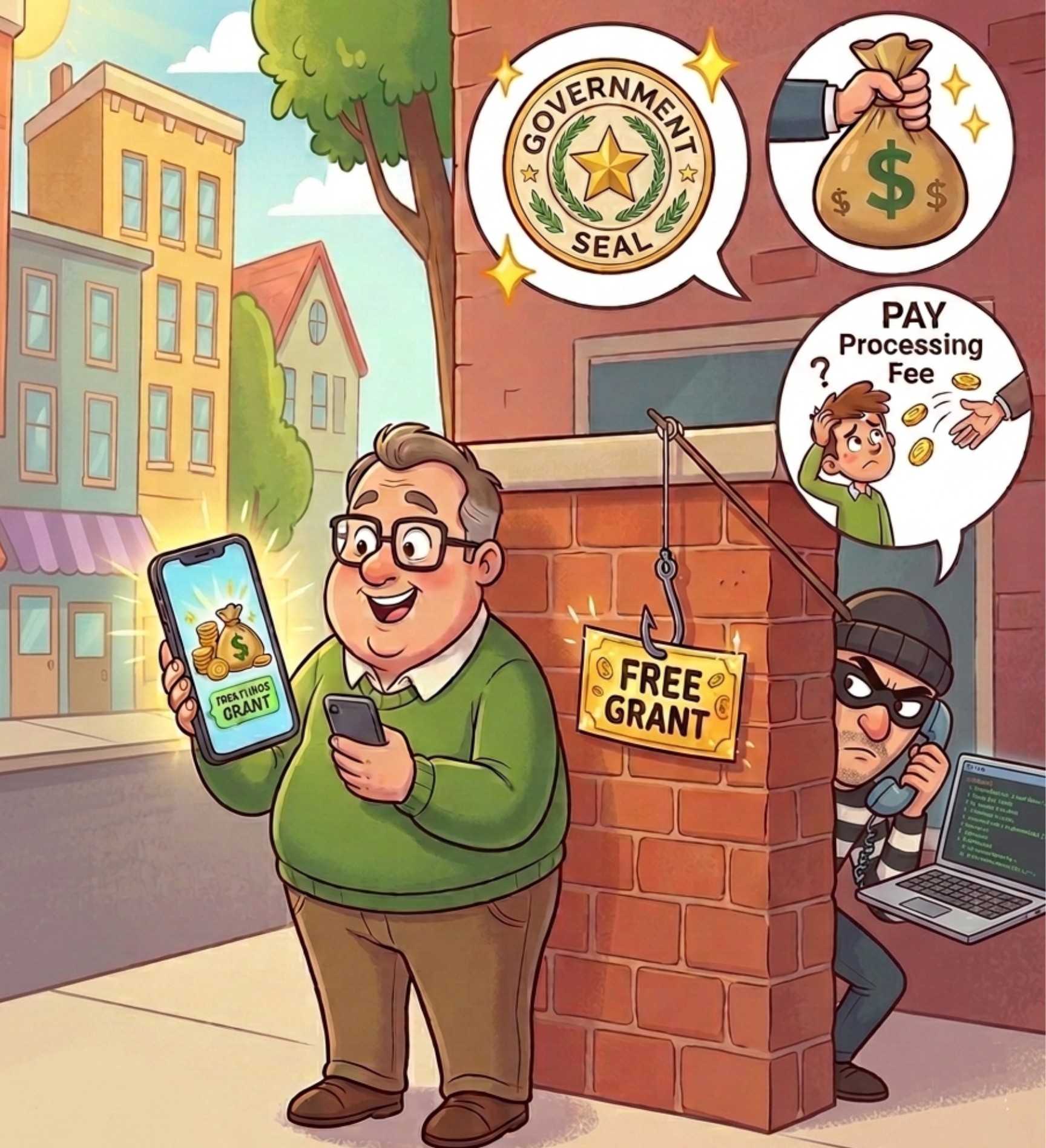
 The Federal Trade Commission recently issued an alert concerning a resurgence of fraudulent activity involving "free government grants." Scammers currently utilize social media and text messages to reach potential victims, promising significant sums of money for personal expenses such as home repairs, medical bills, or general financial relief. These criminals often pretend to represent legitimate agencies or invent official-sounding entities, including the non-existent "Federal Grants Administration," to gain trust.
The hallmark of this deception remains the requirement of an upfront "processing" or "delivery" fee. Fraudsters claim these funds are necessary to release the grant. They typically demand payment through untraceable methods, including gift cards, cryptocurrency, or wire transfers. Additionally, they may request sensitive bank details under the guise of depositing the non-existent funds, leading to identity theft or unauthorized withdrawals.
Global Variations of Government Impersonation
This type of fraud is not unique to the United States. Similar schemes proliferate globally, as scammers exploit the high level of trust people place in public institutions.
🇨🇦 Canada: The Canadian Anti-Fraud Centre notes a significant rise in government impersonation. Scammers frequently mimic the Canada Revenue Agency or Service Canada, sending "ghost texts" regarding unclaimed tax rebates or grants to lure victims into providing personal information.
🇬🇧 United Kingdom: Fraudsters often impersonate HM Revenue and Customs (HMRC), claiming citizens are eligible for energy grants or cost-of-living payments. These messages usually contain malicious links directing users to sophisticated phishing websites.
🇦🇺 Australia: The Community Grants Hub recently warned against emails and social media messages regarding fake initiatives like the "RISE Empowerment Fund." These scams often target small business owners and individuals seeking financial support.
Protecting Yourself from Grant Fraud
Legitimate government grants do not require an application fee, and agencies will never contact you via social media to offer unsolicited money. To remain secure, you should ignore any message demanding immediate action or unusual payment methods. Always verify the status of any grant by visiting official government websites directly, ensuring the URL ends in a trusted domain like .gov or .gc.ca. Also keep an eye out for look-alike characters and typo-squatting, which is common with this type of scam.
If you encounter a suspicious offer, report it to the Federal Trade Commission or your local anti-fraud authority immediately. Sharing these warnings with friends and family is a vital step in preventing further financial loss within the community.
- Log in to post comments