
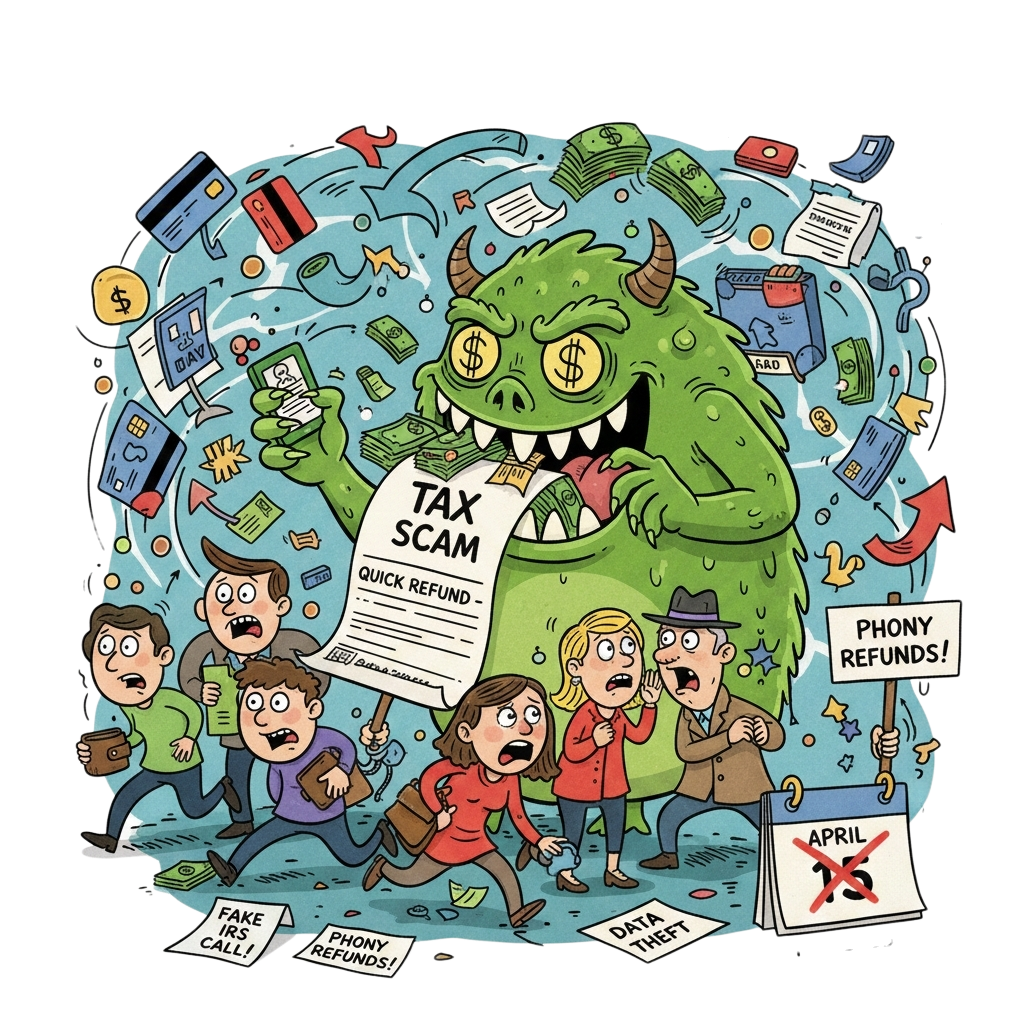
 As the 2026 tax season begins, fraudsters are deploying increasingly sophisticated methods to intercept personal data and financial assets worldwide. These operations exploit the shift toward digital filing by closely imitating official government communications, often appearing legitimate at first glance, making awareness the primary defense against evolving tax related fraud.
🇨🇦 Canada: T4 Phishing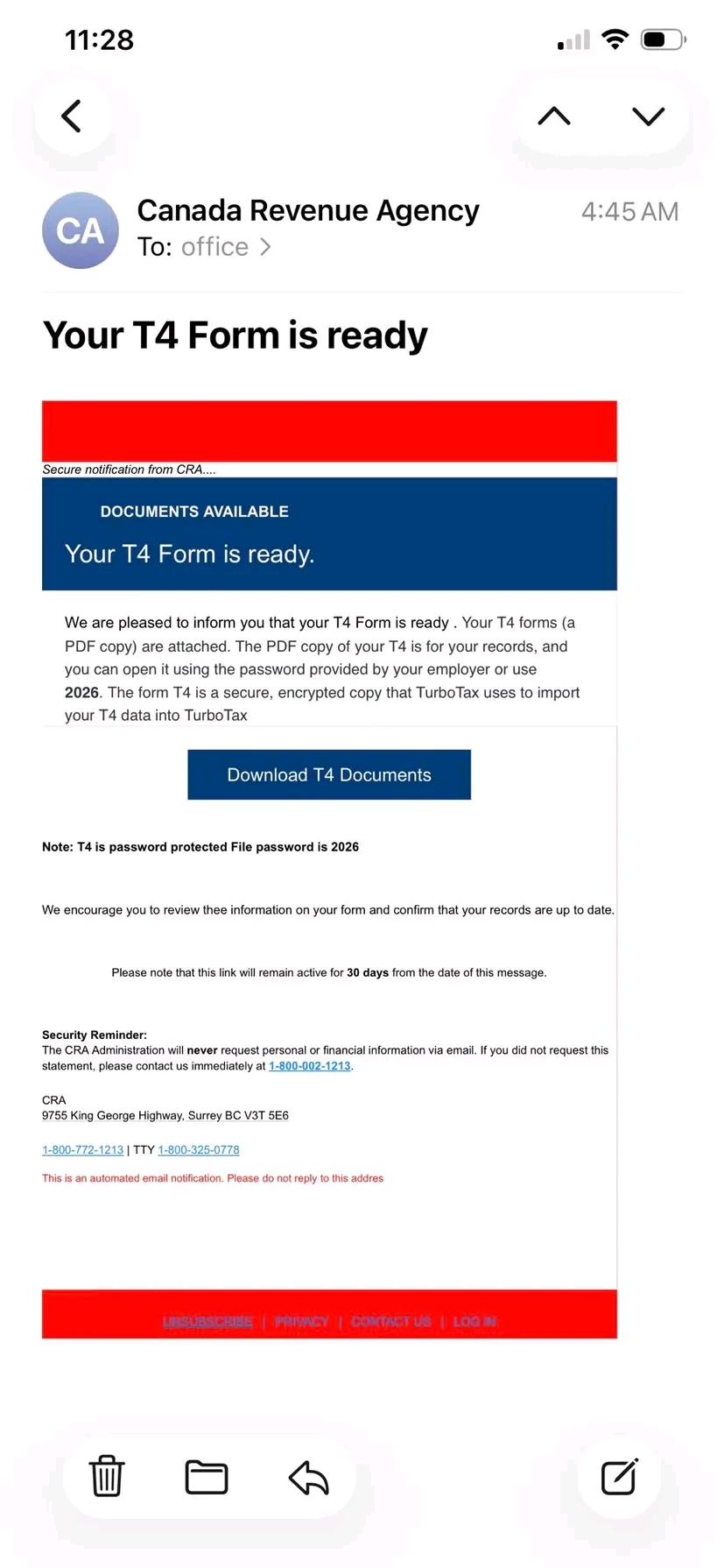 and Benefit Scams
In Canada, the dominant threat involves impersonation of the Canada Revenue Agency, particularly during peak tax document distribution periods, primarily focusing on harvesting personal identifiers and banking credentials.
T4 “Ready for Download” Messages
Taxpayers are receiving emails claiming their T4 slips are available for download. These messages often include a password such as 2026 to open an attachment or direct recipients to a cloned login portal. Legitimate notifications never include direct links to tax forms and instead instruct users to sign in manually through the official secure portal.
Targeted Benefit Alerts
Fraudsters are sending SMS and email notifications referencing specific credits, including the Multigenerational Home Renovation Tax Credit. These messages claim an unclaimed refund is available and redirect victims to fraudulent websites designed to capture banking and identity information.
Aggressive Phone Tactics
Callers posing as government representatives use threatening language and claim immediate arrest or legal action for non compliance. Victims are pressured to make payments using cryptocurrency, prepaid gift cards, or other non traditional methods.
🇺🇸 United States: Fictitious Agencies and Debt Schemes
Authorities continue to report a surge in tax related fraud aimed at American taxpayers, particularly through phone based and digital impersonation schemes.
Fake Agency Phone Scams
Targets have reported calls from individuals claiming to represent non existent entities such as the “Tax Resolution Oversight Department” or the “Tax Mediation and Resolution Agency.” These callers allege unpaid tax debt and offer enrollment in fabricated IRS relief programs to collect Social Security Numbers and upfront fees.
Offer in Compromise Mills
Promoters heavily market “pennies on the dollar” tax settlements. These companies charge substantial upfront fees to taxpayers who do not qualify for the legitimate government program, often worsening their financial situation rather than resolving it.
Smishing for Identity Theft
Text messages claim a tax refund has been processed and requires identity verification. Clicking the link leads to credential harvesting sites designed to capture banking and personal data.
🌍 International Trends: Regulation and Digital Portals
Outside North America, scammers are exploiting regulatory changes and growing reliance on centralized digital identity and tax systems.
🇸🇬 Singapore
Phishing campaigns use unsolicited emails claiming tax refund eligibility. Links redirect victims to fake Singpass verification pages designed to steal login credentials and banking information.
🇿🇦 South Africa
The revenue service has warned about fraudulent “Summons Notices” and “Letters of Demand” delivered via email. These often include malicious attachments or links to payment portals mimicking official systems.
🇲🇽 Mexico
Following the rollout of the 2026 Master Plan for tax oversight, scammers are issuing fake compliance alerts. These messages pressure businesses into paying fabricated fees to avoid audits.
🇪🇺 Europe
New crypto asset reporting directives are being abused by fraudsters posing as compliance officers. Victims are instructed to pay verification fees or surrender private keys under the guise of mandatory transparency requirements.
Universal Indicators and Protective Steps
Despite regional differences, tax scams share common warning signs across all jurisdictions.
Urgency
Legitimate tax authorities do not threaten and any collection action will have prior notifications and do not arise out of the blue with threats of imprisonment.
Direct Links
Legitimate tax authorities require users to access secure portals independently. They do not send clickable payment or document links by text or email.
Payment Methods
No government tax agency accepts cryptocurrency, prepaid gift cards, or wire transfers to private individuals as payment for tax obligations.
Verify the Source
Never rely on contact information contained within suspicious messages. Always visit the official government website directly and log in to your account to confirm any notices.
Protect Your Data
If sensitive information or banking details have been disclosed, contact your financial institution immediately, freeze affected accounts, and notify credit monitoring services.
- Log in to post comments