
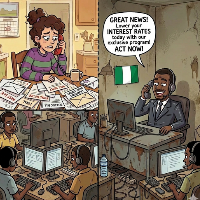
 When the phone rings with an offer to reduce your interest rates, it sounds like relief. Credit card holders, mortgage borrowers, and people with personal loans often struggle with high payments, and scammers know that fear and desperation make people vulnerable. They often promise lower payments or reduced interest to convince victims to listen. At the same time, the operators seek upfront fees, access to sensitive financial information, and sometimes direct victims to fake wire transfer or banking websites designed to capture their online banking credentials.
These scams are designed to steal information and money rather than negotiate with your lender. The more dangerous outcomes are identity theft, unauthorized withdrawals, and compromised accounts that can haunt victims for years.
Why the Scam Persuades People
The fraud works because it mirrors legitimate financial structures and exploits genuine fear.
Scammers create a sense of urgency and financial risk by presenting false loan modification programs or mortgage rescue services. They claim that immediate action is necessary to reduce payments or avoid repossession, even when there is no real threat. This fear and the promise of relief make victims more likely to provide sensitive information or pay upfront fees.
Credit Card and Bank Account Harvesting
Scammers often request sensitive financial information under the guise of “account verification” or “processing fees.” They ask for credit card numbers, expiry dates, and security codes, and they request full bank account numbers, routing details, and online banking credentials, claiming that these are needed to deposit savings or complete a reduction. Phishing emails, text messages, cloned websites, and malicious QR codes redirect victims to fake portals where all information is collected.
Once scammers gain access to credit card or bank account details, they can make immediate unauthorized purchases, set up recurring withdrawals, commit identity theft to open new accounts, or divert payments into their own accounts. The theft can remain undetected for months, causing financial loss, ruined credit, and a long recovery process.
Money Transfer Phishing
Many scams also involve directing victims to fake wire transfer or banking websites to collect login credentials and other sensitive data. Victims may believe they are entering information to process payments or receive rate reductions, but the data is captured by scammers and used to access accounts directly. This method allows operators to steal funds and sensitive information without physically moving the money themselves.
Who Runs These Scams
The perpetrators of these schemes range from individual fraudsters to organized criminal operators, and in some cases, loan sharks are involved. Loan sharks lend money at extreme interest rates and may operate under the guise of debt relief or rate reduction services to extract fees and financial information. They rely on intimidation and threats in addition to fraudulent tactics to ensure victims comply. Even when the scam appears to be a simple interest rate reduction offer, the underlying operators may be part of a wider network of predatory lenders who exploit fear and financial vulnerability.
When the Legal World and the Criminal World Overlap
Scammers are effective because they hide in the grey area of legitimate finance. Debt relief and refinancing companies sometimes charge large upfront fees for services that consumers could arrange themselves by speaking directly with their lender. The line between predatory but technically legal services and outright fraud is not always clear to the person in debt. Scammers exploit this blurred line by imitating the language of financial services, mixing partial truths with false promises to appear believable.
The Global Scale of the Problem
Interest rate rescue scams and related frauds are a significant global issue:
- Global Impact: Scammers have siphoned away over $1.03 trillion globally in just the past year (Global Anti-Scam Alliance, 2024).
- Canada: In 2024, Canadians reported losses exceeding $638 million to fraud and cybercrime (Royal Canadian Mounted Police, 2024).
- United States: The Federal Trade Commission reported nearly 26,000 cases of advance-fee loan abuse in 2024, costing victims about $75 million (Federal Trade Commission, 2024).
- United Kingdom: In 2024, the UK experienced a 12% increase in reported fraud cases, reaching a record 3.31 million incidents, with total losses amounting to £1.17 billion ($1.6 billion) (Reuters / UK Fraud Report, 2024).
These statistics underscore the widespread and growing nature of interest rate rescue scams and related frauds, affecting individuals across various countries and financial systems.
How to Protect Yourself
🕵️♀️ Verify the caller – Contact your bank directly using the number on your card or official statements.
🔒 Never share sensitive information – Do not give full card numbers, expiry dates, security codes, or online banking login details.
📧 Beware of suspicious links – Do not click links in unexpected emails or text messages and avoid scanning QR codes from unknown sources.
⚡ Set up account alerts – Receive notifications for any transactions to monitor for unauthorized activity.
🛡️ Enable two-factor authentication (2FA) – Add an extra layer of protection for your online banking accounts.
📄 Review statements regularly – Check account statements daily for unusual charges, transfers, or withdrawals.
📞 Report suspected fraud immediately – Contact your card issuer and bank, cancel affected accounts, and file a report with your local fraud centre or financial regulator.
Whether it is a smooth-talking telemarketer, a fraudulent mortgage consultant, or a loan shark working behind the scenes, the method is the same. They exploit debt, collect upfront fees, harvest financial information, and then either vanish or intimidate. Legitimate lenders operate under contracts, regulations, and oversight, while scammers offer only pressure and deception. The only guarantee a scammer provides is that once they are paid or once they gain access to credit card or bank account details, the damage is real and the recovery is costly.
- Log in to post comments