
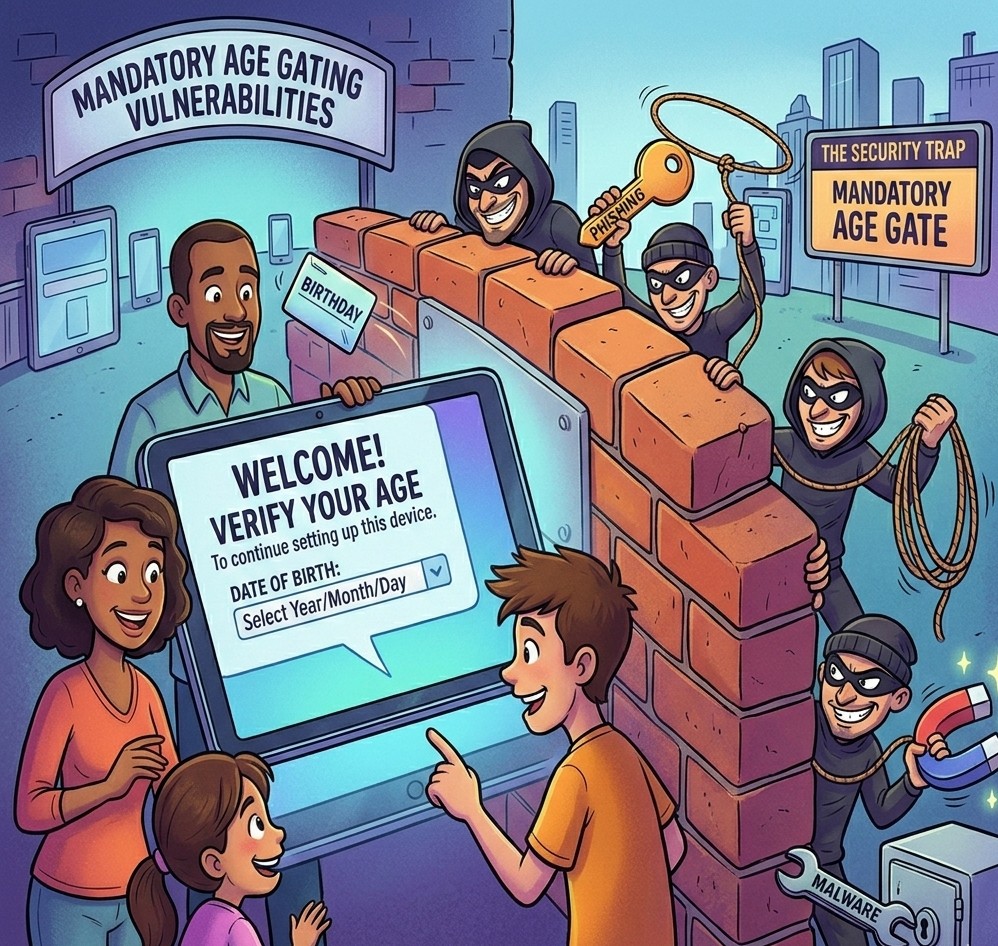
 Moving identity verification from websites directly into the operating system of a device creates a permanent phishing season for every user in North America and beyond.
Every time you set up a new smartphone or computer, you are now entering a high-stakes security gauntlet. Under new laws such as the Digital Age Assurance Act (AB 1043) in California, operating systems are no longer just platforms for your software. They are being legally transformed into mandatory identity checkpoints.
This shift, intended to protect children, is inadvertently building a massive technical infrastructure. Cybercriminals are already preparing to exploit this development. By mandating age verification happens at the system level, governments are creating a new, universal pretext for Verishing (yes, I just made that up.) This puts every adult and child at risk.
I recently wrote another article on this topic exploring the fundamental conflict between these mandates and digital privacy:
The Age Gate Paradox: Protection Mandates Colliding With Digital Security
The Perfect Pretext for Verishing
Scammers depend on creating a believable reason for a user to hand over sensitive data. These new mandates provide the ultimate cover for such activities.
- Deceptive Setup Screens: Because users will expect to see age verification prompts during the initial setup of an iPhone, Android, or Windows PC, attackers can easily mimic these system-level interfaces.
- The Verishing Scam: A user might receive a system notification or a highly convincing email claiming the device is out of compliance with provincial or state law. When the user clicks to verify, they are not talking to Apple or Microsoft. They are handing their driver’s licence and facial biometrics directly to an identity theft ring.
- Adults at Risk: To prove adulthood, users must often provide passports or credit card details. This requirement turns every age check into a potential gold mine for financial fraud.
Centralizing the Target: The Honey Pot Effect
By requiring an operating system to generate a digital token or signal representing the age of a user, these laws create a centralized point of failure.
- Database Vulnerability: If a single entity manages the age verification data for millions of citizens, a single breach could lead to identity theft on an unprecedented scale.
- Signal Interception: Malicious applications could attempt to sniff or intercept the digital handshake between the operating system and other apps. If an attacker can spoof an adult signal, they can bypass protections. If they can steal the signal, they may be able to link it back to the specific hardware of a user.
The Linux and Open Source Dilemma
The inclusion of open source operating systems such as Linux in these mandates presents a unique security challenge. Unlike proprietary systems managed by a single corporation, a global community maintains Linux.
To comply with regional laws, developers may feel pressured to integrate third-party verification modules into their software. If these modules are not perfectly audited, they could introduce zero-day vulnerabilities directly into the heart of the operating system. Furthermore, users seeking to avoid these hurdles might turn to unverified or cracked versions of the operating system. This leads to users unknowingly installing malware bypassing legitimate security protections.
A Global Pattern of Risk
This is not a localized issue. From the social media ban for those under 16 in Australia to the move toward biometric hardware matching in South Korea, the trend is clear. The physical device is becoming a mandatory identity terminal. In Canada, proposed legislation such as Bill S-209 is sparking similar debates about the creation of a permanent digital footprint for every citizen.
How to Protect Yourself from Bad Actors
To counter these emerging threats, users must adopt a more rigorous approach to device security. While the law mandates these features, individual vigilance remains the primary line of defence against those exploiting the transition.
- Verify the Source: Never click a link in an email or a text message claiming your device is out of compliance. If a verification is truly required, the operating system will prompt you directly through the official system settings menu.
- Check System Settings Manually: If you receive a notification, close it and manually navigate to your device settings. If there is no corresponding alert within the official account management section, the initial prompt was likely a phishing attempt.
- Use Official Distributions Only: For Linux users, this period of regulatory change is particularly dangerous. Stick to official repositories and verified ISO files from trusted developers. Avoid downloading pre-patched or compliant versions of an operating system from third-party forums, as these often contain embedded malware.
- Review App Permissions: Regularly audit which applications have access to the age signal of the device. If a simple utility or game is requesting your verified age, deny the permission unless it is strictly necessary for the function of the software.
Protecting the Vulnerable
The irony of these laws is that they may place children at greater risk. By mandating a verified digital record at the device level, we are ensuring the online presence of a child is tracked and categorized from the moment they first power on a tablet.
For everyone, the transition toward mandatory age gating changes the fundamental trust architecture of our devices. What was once a private tool for communication is becoming a mandatory identity checkpoint. As we move toward this new digital landscape, we must recognize every new gate we build is also a new door an attacker will eventually learn to unlock.
- Log in to post comments