
 The global rush into precious metals has created more than just higher prices. It has created opportunity for fraud on a massive scale.
As inflation fears, geopolitical instability, and distrust in fiat currency continue to rise, demand for gold and silver has surged. Private buyers are increasingly turning to Facebook Marketplace, private groups, local classifieds, and peer to peer sales to secure bullion and bars. This surge has triggered a feeding frenzy for scammers who know exactly where regulation is weakest and trust is easiest to exploit.
We have warned before about precious metal related scams, including gold investment frauds tied to foreign mining claims and fake export deals. One of our earlier posts on this topic can be found on our Facebook page here:
This article focuses on a more dangerous and far more common threat: fake physical metals being sold as real.
Why Fake Metals Are Exploding Right Now
Unlike regulated bullion dealers, the private market has no mandatory testing standards, no licensing requirements, and very little accountability. Scammers understand this environment well.
Several factors are driving the current wave of fake silver and gold:
• Rising spot prices make even small quantities attractive to counterfeit
• New buyers lack experience with testing and verification
• Social media platforms enable fast, disposable seller accounts
• Trust is built using packaging, branding, and visual cues instead of verification
Scammers are no longer selling obvious junk. They are selling items designed to look legitimate even to experienced collectors.
The Fake Silver Problem
Here are a few images I recently stumbled across in a Facebook group related to silver buying
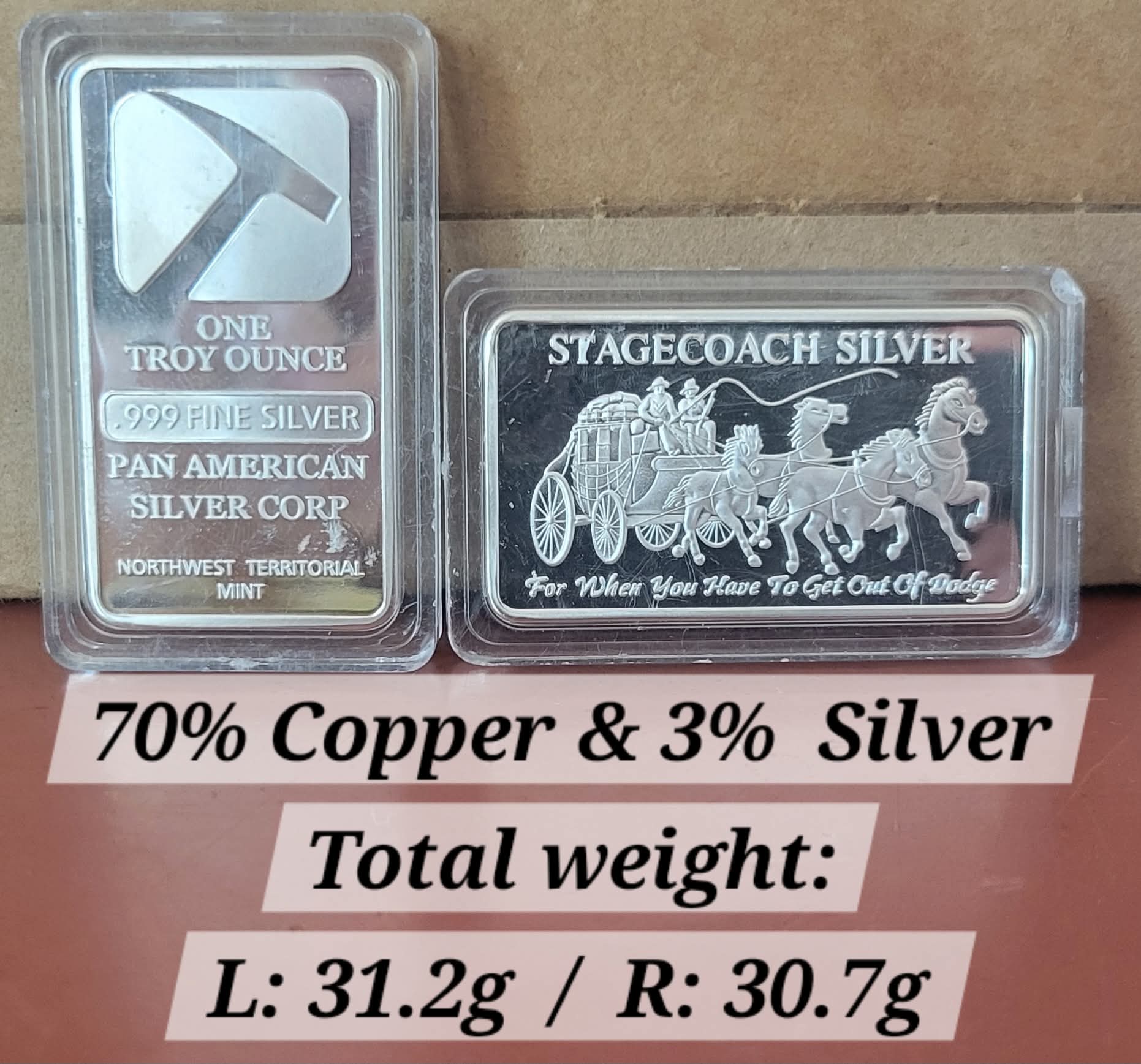
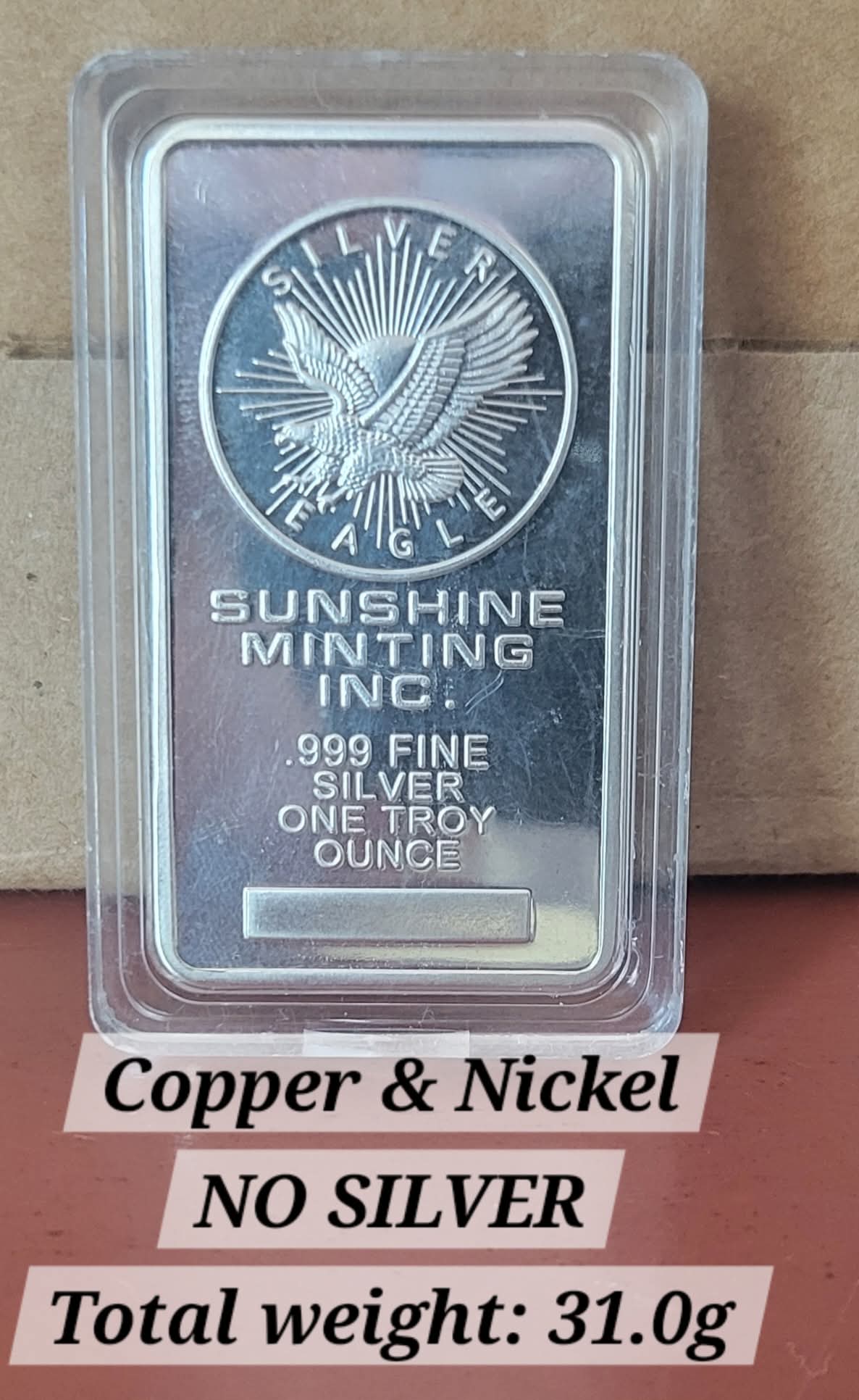
Bars and rounds that are stamped or branded as .999 fine silver, sealed in plastic cases, and presented as one troy ounce products. On the surface, everything appears correct. Weight is close to 31.1 grams. The packaging looks professional. The branding references known mints.
But metallurgical testing tells a very different story.
In these examples, non destructive testing revealed compositions such as:
• High copper content
• Trace silver content measured in low single digit percentages
• Total weight engineered to mimic silver while masking density differences
One tested sample showed approximately seventy percent copper and only three percent silver.
That is not silver bullion it is plated or alloyed scrap metal.
How These Fakes Fool Buyers
Modern counterfeits are designed to bypass casual checks.
Weight alone is no longer enough. Many counterfeit bars are intentionally overweight to compensate for lower density metals. Visual inspection is unreliable because molds are taken from real bars. Even magnet tests can be defeated using specific alloy blends.
Common tactics include:
• Selling sealed bars to discourage testing
• Claiming private mint or limited run origins
• Using vague backstories such as estate finds or bulk liquidations
• Offering slightly below spot pricing to create urgency
Once money changes hands, sellers disappear. Accounts are deleted. Messages go unanswered.
Why the Private Market Is Targeted
Private buyers are attractive targets for one simple reason. They assume physical metal equals safety, an assumption exploited by scammers
Unlike bank wire fraud or crypto scams, victims often do not realize they have been scammed until months or years later when they attempt to resell or test their holdings. By then, recovery is impossible.
Law enforcement involvement is rare because transactions are informal and cross jurisdictional. Platforms often decline responsibility. The loss stays with the buyer.
How to Protect Yourself
If you are buying precious metals outside of established dealers, you need to assume risk by default.
Minimum precautions include:
• Independent testing using XRF or ultrasound
• Buying only from sellers who allow verification before payment
• Avoiding sealed packaging that cannot be opened
• Being suspicious of private mint claims with no verifiable history
• Walking away from deals priced below market without a clear reason
If a seller refuses testing, refuses meeting at a dealer, or pressures you to act quickly, you should simply walk away.
The demand for precious metals is real. So is the fraud following it.
Fake silver and gold are not isolated incidents, they are part of an organized, scalable scam ecosystem thriving on rising prices and buyer fear.
Physical metal is only a store of value if it is real.
- Log in to post comments