
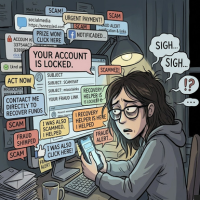
 Scams are everywhere, and if you follow Global Scam Watch you are already ahead of most when it comes to spotting red flags, suspicious links, and urgent payment demands. That awareness is exactly what makes you a target for a newer tactic known as Fraud Fatigue. This is not about one message tricking you, it is about wearing you down over time. Criminal networks are shifting away from simple mass scams and moving toward strategies designed to exploit human cognitive limits, where the goal is to desensitize you until your guard drops at the worst possible moment.
The Psychology Of The Fraud Fatigue Trap
INTERPOL describes this as the industrialization of fraud, where organized groups use automated systems to flood phones and inboxes with low quality scam messages. These are often obvious, poorly written lures pretending to be delivery services or utility providers. Over time, this constant noise creates a “boy who cried wolf” effect where your brain starts treating all alerts as low priority background clutter. As that fatigue builds, your ability to carefully analyze new messages drops, and you begin reacting on autopilot instead of thinking critically. That is the opening scammers are waiting for.
Once that fatigue sets in, the approach changes. More advanced operations begin using Agentic AI to deliver polished, highly convincing messages that look professional and credible. The FBI Internet Crime Complaint Center (IC3) has warned that these systems can transition from spam level garbage to targeted, realistic communication using data from breaches, including details like recent purchases or local financial institutions. Modern scam messages no longer contain the spelling mistakes and awkward phrasing people used to rely on as warning signs. In many cases, they look more legitimate than real corporate emails.
This is often part of a Multi Channel Fraud Journey, where pressure is applied across several platforms to create a false sense of legitimacy. The Australian Federal Police has warned about patterns where victims receive days of low quality texts, followed by a well crafted email, and then a phone call using a cloned voice. According to the INTERPOL Global Financial Fraud Threat Assessment, AI driven scams are now significantly more profitable than traditional methods. This has led to tools like I GRIP, a system designed to help law enforcement freeze fraudulent transfers across borders in real time.
I GRIP And The Risk Of Recovery Scams
With that in mind, there is a second threat people need to understand, recovery scams. Fraudsters are now impersonating INTERPOL or police investigators and even referencing I GRIP to sound legitimate. They target people who have already lost money, claiming funds have been recovered and are ready for release, but require a fee to process. This is a classic advance fee scam. It is critical to understand that INTERPOL does not contact the public directly about financial recoveries. Any real process will go through your local police or financial institution, never through an unsolicited message.
Recovery Scams take advantage of a different kind of fatigue. Victims are often stressed, exhausted, and looking for answers after hitting dead ends. Scammers step in pretending to be helpful, often claiming they were victims themselves and offering insider guidance. This creates a false sense of trust and relief, lowering skepticism at exactly the wrong time.
That “former victim” story is not accidental, it is a calculated tactic. It builds instant emotional connection and bypasses suspicion by making the scammer appear relatable instead of authoritative. They will often push conversations into private messages, where there is no public oversight, and where they can build trust more easily. What looks like support from someone who understands the situation is actually a controlled social engineering setup designed to lead to another loss.
A common version of this shows up in social media comment sections, including posts on the Global Scam Watch Facebook Page and law enforcement pages. Scammers pose as bystanders and claim they successfully recovered funds through a specific “expert,” often tagging fake recovery agents, recovery lawyers or so called ethical hackers. These comments are designed to look helpful and empathetic, but they are part of the trap. Any phone number, contact, or tagged recovery service offered in a comment is a guaranteed scam, and removing them quickly is critical to protecting others.
Strategic Defenses
Avoiding the fatigue trap comes down to discipline, not just awareness, the most effective defense is simple but often ignored, pause before you act. If a message creates urgency or plays on emotion, stop and think. That pause is what breaks the scammers control and gives you the chance to assess the situation properly.
Verification matters just as much. Never trust contact details provided in a message. Always go directly to official sources, whether that means calling the number on your bank card or using a verified government website. Scammers rely on speed and emotional reactions, not logic. Slowing the process down is how you take that advantage away.
- Log in to post comments