
We have all seen it before, the Persian rug store with the enormous Going Out of Business banner permanently stretched across its windows. Months go by, then years, and somehow the sale never ends and the business never closes. What was supposed to be a final liquidation becomes a permanent state of emergency, designed to create urgency, suppress skepticism, and push customers into making rushed purchases. Over time, the tactic became almost a cultural joke, but the underlying psychology worked well enough it never truly disappeared.
FROM STOREFRONTS TO SCREENS
While the Persian rug shops had legitimate products a new breed of online scams operates with more deception. The Going Out of Business sense of urgency is reaching a global market as it moves from storefront windows to online screens. This cyber-shift has enabled the Going out of Business Scam to become far more effective and far more profitable. There is no physical location to revisit, no familiar sign overstaying its welcome, instead, there is a website, a polished story, and a sense you have stumbled upon a rare time limited opportunity.
THE ONLINE VERSION OF AN OLD TRICK
Online, the going out of business sale has evolved into a full business model. Fake retailers now present themselves as small, family-run operations closing their doors after years of hard work. The stories are carefully written to evoke trust and sympathy, often involving retirement, burnout, or a desire to spend more time with family. The sale is framed as a final thank you to loyal customers, with dramatic discounts appearing too generous to question. Scarcity is emphasized at every turn, even though the store itself often has no real history.
THE ETHAN AND LARA JEWELRY SCAM
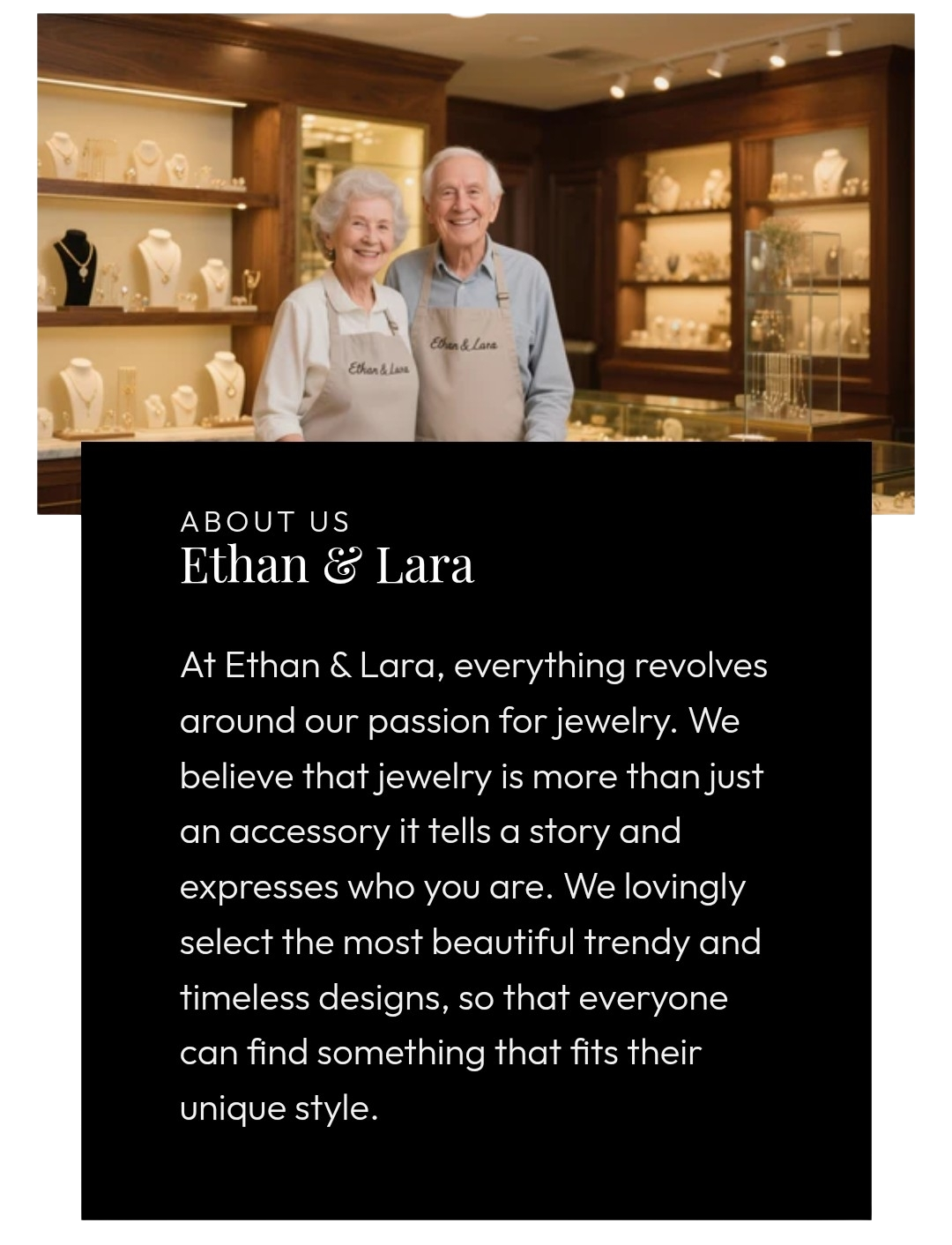 A recent and telling example is the Ethan and Lara jewelry scam. The brand claimed to be a husband and wife jewelry business shutting down after years of craftsmanship. The website leaned heavily on emotion, presenting the closure as bittersweet and unavoidable. Items were advertised at extreme discounts, with some pieces listed as free, requiring only a small shipping fee. To a casual shopper, it looked like the kind of closing sale people dream of finding.
In reality, the entire operation unraveled under even minimal scrutiny. The website was newly registered despite claims of long-term operation, and there was no verifiable business history to support the story being told. Customers later reported unexpected recurring charges, subscription enrollments hidden in checkout flows, and low quality jewelry it even close to what was being presented online; some even reported never receiving their shipment at all.
WHY THIS WORKS SO WELL ONLINE
This is where the online version becomes more dangerous than its brick and mortar predecessor. A physical rug store which never closes may be deceptive advertising, but at least you can see what you are purchasing. In contrast, a fake online store can vanish overnight and reappear the next day under a new name, a new story, and a new domain. The countdown clocks reset. The emotional narrative is recycled. The pressure begins again, aimed at an entirely new audience.
THE PERMANENT CLOSING SALE
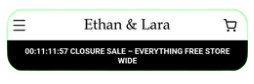
What connects the old Persian rug trope and modern online scams is the same core deception.
- The urgency is fake.
- The closure is fictional.
- The sale is permanent.
The difference is scale and speed; what once targeted a neighbourhood now targets millions of people through social media ads and algorithmic reach, allowing these scams to cycle endlessly with little consequence.
THE REAL RED FLAG: CHECK THE CYBER-TRAIL
One of the easiest ways to cut through a fake online going out of business story is to ignore the emotion and check the internet’s Cyber trail. Scammers rely on the assumption most people will not verify anything beyond what is shown on the website. In reality, a few basic tools can dismantle the entire narrative in minutes.
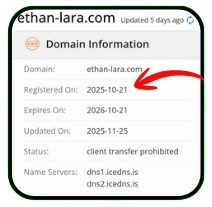
A business claiming decades of operation should not be operating on a domain registered weeks or months ago. Using a WHOIS lookup allows anyone to see when a domain was created. If a jewelry brand says it has been handcrafting pieces for years but the domain only appeared recently the disconnect is not a coincidence - it is the first and most obvious sign the story was invented to sell urgency.

The Internet Archive’s Wayback Machine adds another layer of verification. By checking archived snapshots of a website, it becomes clear whether the business existed before its supposed closing sale or whether the domain suddenly appeared already in a state of liquidation. In many scams, the earliest archived version of the site already claims to be going out of business, with no earlier content, no evolution, and no evidence of a functioning store before the “final sale.”
- Legitimate businesses have histories.
- Their websites change over time.
- Products come and go.
- Sales start and end.
Scams skip the logical path of a business lifecycle and jump right to the emotionally charged urgency of going out of business.
If the domain is new and the archive shows no past life beyond a clearance banner, the story has already collapsed. At this point, the only thing going out of business is the truth.
The Ethan and Lara jewelry scam will eventually burn out. The ads will stop, the website will vanish, and the name will become unusable as complaints accumulate. What does not end is the tactic itself as other sites will take its place with different names, a new emotional backstory, and fresh domains, the one thing which will remain is the manufactured urgency.
Unlike the persistent Persian Rug tactic, these online flavours are not built for longevity, they are designed for speed, turnover, and repetition, relying on the fact a new brand will not raise suspicion with previous victims. For this reason verification is more critical than branding, testimonials, or how sincere a story appears.
- Before accepting a business is closing, it is worth checking when it actually opened.
- Before trusting claims of years of craftsmanship, it helps to look for years of digital history.
Tools like WHOIS records and the Internet Archive’s Wayback Machine cut through emotion and marketing entirely. They show when a domain was created and whether a real business existed before the so-called final sale.
- Log in to post comments